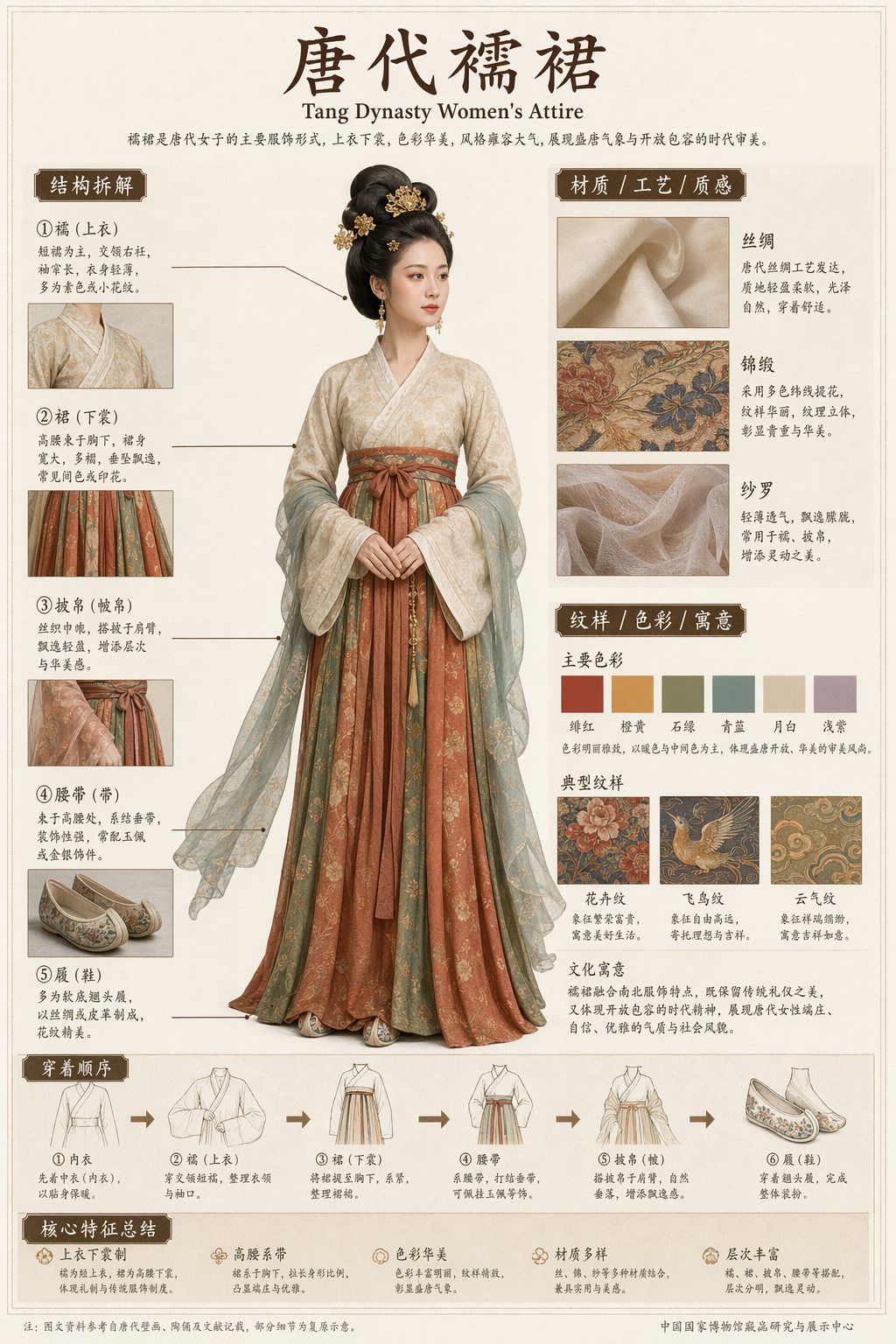
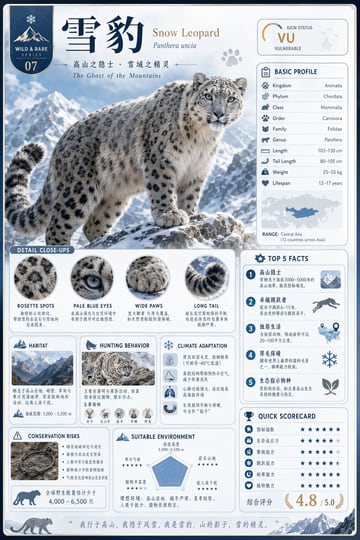
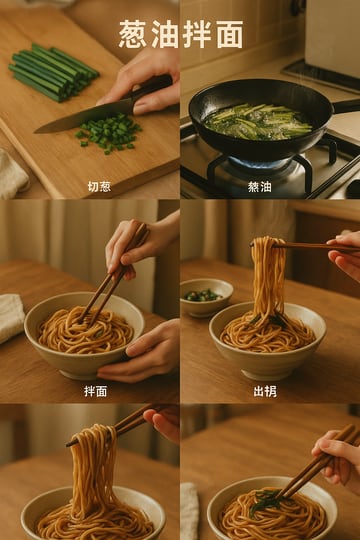
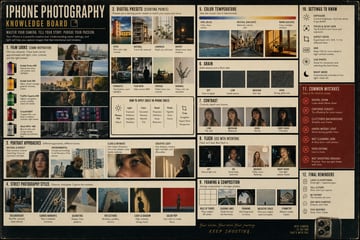
PromptPlease automatically generate a "museum catalog-style Chinese disassembly infographic" based on the [Subject].
The entire image is required to combine a realistic main visual, structural disassembly, Chinese annotations, material descriptions, pattern meanings, color meanings, and core feature summaries. You need to automatically determine the most appropriate main subject, clothing system, artifact structure, era style, key components, material craftsmanship, color scheme, and layout structure based on the [Subject], and the user does not need to provide any other information.
The overall style should be: national museum exhibition boards, historical clothing catalogs, and cultural/museum thematic infographics, rather than ordinary posters, ancient-style portraits, e-commerce detail pages, or anime illustrations. The background uses paper textures such as off-white, silk white, and light tea color, making the overall look premium, restrained, professional, and collectible.
The layout is fixed as:
- Top: Chinese main title + subtitle + introduction
- Left: Structural disassembly area, with Chinese lead lines annotating key components, accompanied by close-up details
- Upper right: Material / craftsmanship / texture area, displaying real texture samples with descriptions
- Middle right: Pattern / color / meaning area, displaying the main color palette, pattern samples, and cultural explanations
- Bottom: Dressing order / composition flowchart + core feature summary
If the subject is suitable for character display, use a full-body standing posture of a real person as the central subject; if it is more suitable for artifacts or single structures, change it to a central subject disassembly diagram, but the overall form remains a complete Chinese infographic. All text must be in Simplified Chinese, clear, neat, and readable, without garbled characters, typos, English, or pinyin.
Avoid: poster feel, studio portrait feel, e-commerce feel, anime feel, cosplay feel, random annotations, incorrect structures, blurry text, fake materials, excessive decoration.
Prompt structure- Modelgpt-image-2
- Use caseavatar
- Styleanime, editorial, photorealistic, luxury
- Aspect ratioportrait
Best used for- Use caseavatar
- Styleanime, editorial, photorealistic, luxury
- Recommended specsportrait
- ModelGPT Image 2
How to customizeUse this Please Automatically Generate A "museum Catalog-style Chinese Disassembl prompt as a base. Replace the subject, product details, environment, lighting, brand colors, and output ratio while keeping the avatar intent and anime, editorial, photorealistic, luxury direction stable.
Editable variables- SubjectReplace the product, person, scene, interface, or object being generated.
- Use caseKeep or rewrite the destination as avatar, ad creative, cover image, poster, or ecommerce hero.
- Frameportrait
- Brand cuesAdd colors, materials, props, text-safe space, and the platform where the image will be used.
Recommended specsChoose the frame for the destination first, then use 1K, 2K, or 4K based on output quality needs. Product images and posters usually benefit from higher resolution.
Pre-generation checklist- CheckSubject, lighting, composition, and frame are specific enough to review.
- CheckText-safe space is included when the image will carry a headline or ad copy.
- CheckResolution, credit cost, and final destination are checked before generation.
Why this prompt worksPlease Automatically Generate A "museum Catalog-style Chinese Disassembl works because it starts from the image job, then controls subject, composition, lighting, style, and frame. It is best for avatar while keeping the anime, editorial, photorealistic, luxury direction stable.
Common questions- Can I use it directly?Yes. Replace the subject, brand cues, and frame, then generate in Image2Studio.
- Which ratio should I use?portrait