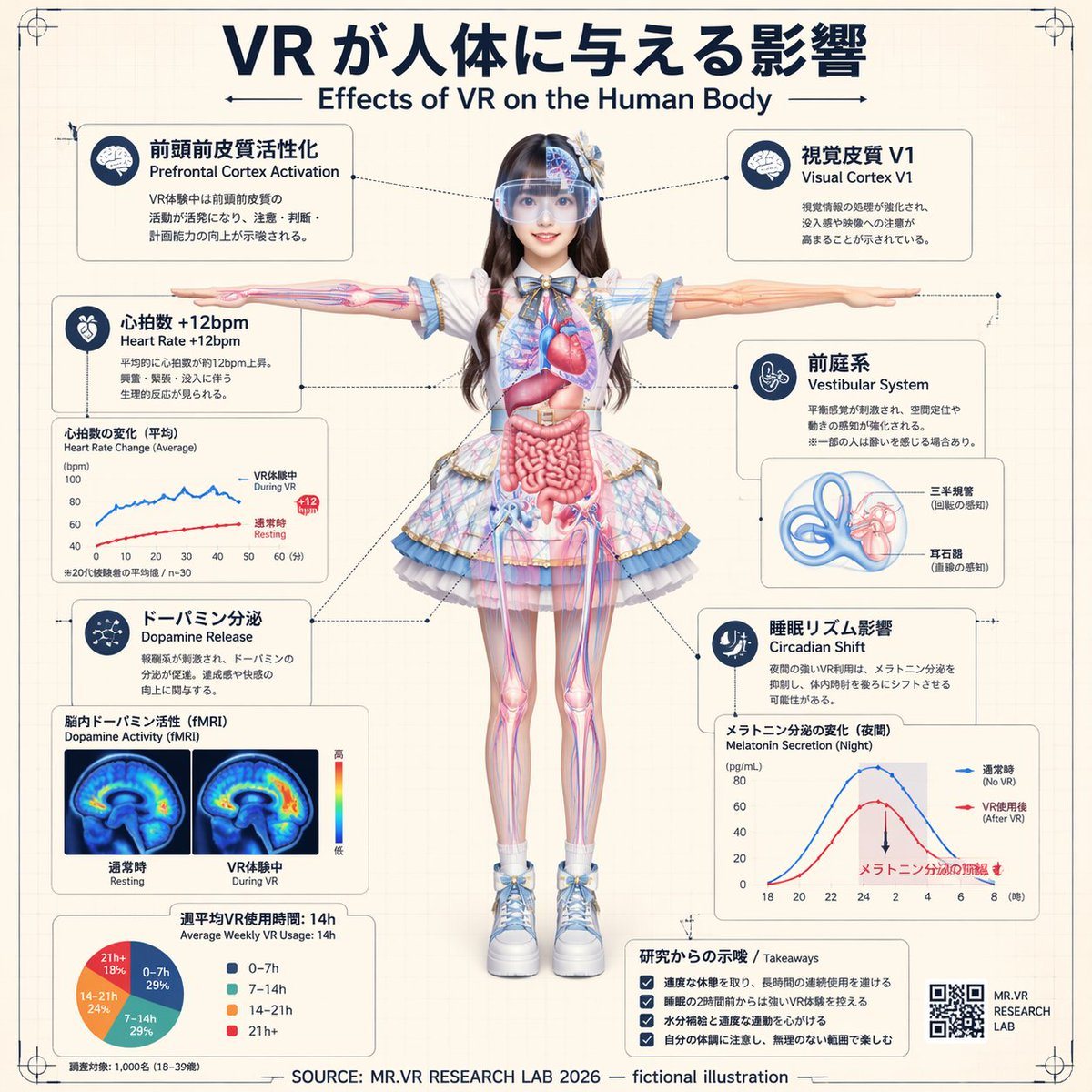
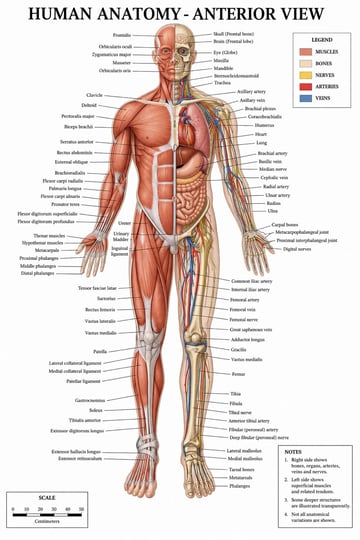
Prompt{"type":"medical infographic poster","subject":"front-facing full-body anime idol girl with semi-transparent anatomical overlay","style":{"overall":"clean Japanese educational infographic mixed with kawaii anime character art and scientific visualization","background":"warm off-white paper tone with faint grid","palette":"navy blue, cream, soft pastel pink, pastel blue, medical reds and blues","rendering":"high-detail polished poster design, crisp vector UI boxes, soft character shading, realistic anatomy illustrations composited into the body"},"character":{"gender_presentation":"female","age_appearance":"teen to young adult","pose":"standing straight, full body centered, arms extended horizontally to both sides","outfit":"frilly pastel idol dress with short puff sleeves, layered skirt, blue ribbon bow at the collar, lace trim, white ankle socks, blue high-top sneakers","hair":{"color":"dark brown","style":"long wavy twin sections falling over shoulders and down past chest, center-parted with small decorative floral hair accessory"},"face":"intentionally blurred/obscured"},"anatomy_overlay":{"visible_parts_count":8,"visible_parts":["glowing brain in the head","heart and lungs in the chest","digestive organs in the abdomen","reproductive/urinary region glow in the pelvis","arteries through both arms","veins through both arms","arteries and veins through both legs","inner ear balance structures highlighted near the head"]},"layout":{"title_block":{"count":2,"lines":["VR が人体に与える影響","Effects of VR on the Human Body"],"position":"top center"},"main_centerpiece":"full-body character in T-pose-like stance with dotted callout lines connecting body regions to surrounding information boxes","info_boxes":{"count":6,"items":[{"title":"前頭前皮質活性化","subtitle":"Prefrontal Cortex Activation","position":"upper left","icon":"brain"},{"title":"視覚皮質 V1","subtitle":"Visual Cortex V1","position":"upper right","icon":"brain"},{"title":"心拍数 +12bpm","subtitle":"Heart Rate +12bpm","position":"left upper-middle","icon":"heart"},{"title":"前庭系","subtitle":"Vestibular System","position":"right middle","icon":"head and balance"},{"title":"ドーパミン分泌","subtitle":"Dopamine Release","position":"left lower-middle","icon":"molecule/network"},{"title":"睡眠リズム影響","subtitle":"Circadian Shift","position":"right lower-middle","icon":"moon and stars"}]},"charts":{"count":4,"items":[{"title":"心拍数の変化(平均)","subtitle":"Heart Rate Change (Average)","position":"left center-lower","chart_type":"line graph with blue and red lines","labels":["VR体験中","通常時","+12"]},{"title":"脳内ドーパミン活性(fMRI)","subtitle":"Dopamine Activity (fMRI)","position":"left lower","chart_type":"two brain scan panels with color scale","labels":["通常時","VR体験中","Resting","During VR"]},{"title":"メラトニン分泌の変化(夜間)","subtitle":"Melatonin Secretion (Night)","position":"right lower","chart_type":"line graph with blue and red curves","labels":["通常時","VR視聴後","No VR","After VR","メラトニン分泌が抑制" ]},{"title":"週平均VR使用時間: 14h","subtitle":"Average Weekly VR Usage: 14h","position":"bottom left","chart_type":"pie chart","labels":["0–7h","7–14h","14–21h","21h+"]}]},"diagrams":{"count":1,"items":[{"title":"inner ear balance diagram","position":"right middle-lower near vestibular box","labels":["三半規管","耳石器"]}]},"research_box":{"count":1,"position":"bottom center-right","title":"研究からの示唆 / Takeaways","bullet_count":4},"branding":{"count":3,"items":["SOURCE: MR.VR RESEARCH LAB 2026","MR.VR RESEARCH LAB","QR code at bottom right"]},"border":"thin decorative technical frame around all edges with corner ornaments and small measurement-like marks"},"text_density":"high, bilingual Japanese and English subtitles throughout","composition":"symmetrical poster with callouts on both sides of the character, charts anchored in the lower corners, title large and bold at top","quality":"sharp, publication-ready, square format"}