Image2Studio
Examples

gpt-image-2

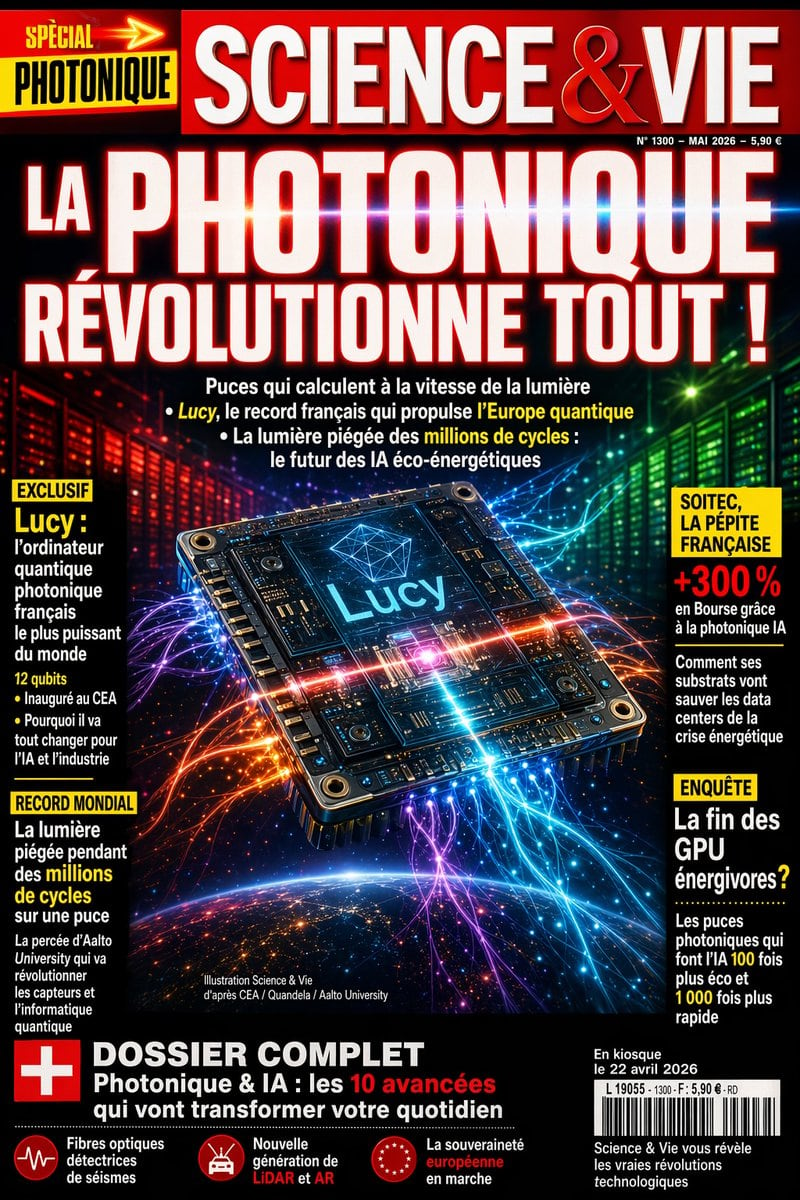
Hyper-detailed French Popular Science Magazine Cover In The Style Of A B

A hyper-detailed French popular science magazine cover in the style of a bold mainstream newsstand publication, full-page vertical layout, dramatic glossy print design, black background w...

A hyper-detailed French popular science magazine cover in the style of a bold mainstream newsstand publication, full-page vertical layout, dramatic glossy print design, black background w...
Prompt

A hyper-detailed French popular science magazine cover in the style of a bold mainstream newsstand publication, full-page vertical layout, dramatic glossy print design, black background with intense neon lighting and saturated red, blue, purple, green, and orange highlights. At the very top, a wide red masthead bar with the magazine title {argument name="magazine title" default="SCIENCE & VIE"} in huge white serif capital letters with subtle beveling and metallic shine; small issue details on the upper right in tiny white text. On the upper left, a bright yellow and black special tag reading {argument name="special tag" default="SPÉCIAL PHOTONIQUE"} with a red arrow motif. The main headline dominates most of the upper half in gigantic white block capitals with a red glow and slight 3D shadow: {argument name="main headline" default="LA PHOTONIQUE RÉVOLUTIONNE TOUT !"}. Beneath it, 3 short cover lines in smaller white text with selected words highlighted in yellow, discussing ultrafast light-speed chips, a French record computer called Lucy, and light trapped for millions of cycles for energy-efficient AI. Centerpiece image: a futuristic square photonic processor chip floating in space at a slight perspective tilt, extremely detailed circuitry, metallic screws at the corners, glowing traces, and a bright cyan-blue core display labeled {argument name="chip name" default="Lucy"}; the chip emits intersecting beams and flowing fiber-optic light trails in electric blue, magenta, orange, and violet that radiate outward across the page. Background behind the chip shows 2 luminous server-wall corridors, red on the left and green on the right, fading into darkness, suggesting a high-tech datacenter. At the bottom, the curved horizon of Earth from space with a soft blue atmospheric glow and scattered city lights. Add 4 side callout boxes total: 2 stacked on the left and 2 stacked on the right, each with yellow headers and white body text, using a magazine cover typography hierarchy. Left box 1 header: "EXCLUSIF", featuring Lucy as the most powerful French photonic quantum computer in the world, with several short bullet lines and a yellow emphasis on "12 qubits". Left box 2 header: "RECORD MONDIAL", about light trapped for millions of cycles in a chip, with yellow emphasis on "millions de cycles". Right box 1 header area in yellow, with a bold red percentage "+300 %" and text about the French gem Soitec rising thanks to photonic AI and saving datacenters during the energy crisis. Right box 2 header: "ENQUÊTE", about the end of power-hungry GPUs, with yellow-highlighted numeric claims such as 100 times cheaper and 1,000 times faster. Near the lower center, tiny white image-credit text. A thick black bottom banner spans the page with a red square containing a white plus symbol on the left, and a large dossier teaser in white and red text: {argument name="bottom feature text" default="DOSSIER COMPLET Photonique & IA : les 10 avancées qui vont transformer votre quotidien"}. Along the very bottom, add 3 small circular red icon blurbs with short white captions about seismic optical fibers, a new generation of LiDAR and AR, and European sovereignty in progress. Lower right corner includes a white barcode box and a short block of white text about the issue being on sale. Overall look: sensational, prestigious, futuristic, glossy, information-dense, sharp editorial typography, dramatic science-news cover, cinematic lighting, high contrast, photorealistic 3D chip illustration mixed with premium magazine graphic design.

Prompt structure
  • Modelgpt-image-2
  • Use casesocial-media-post
  • Styleeditorial, cinematic, cyberpunk, 3d-render
  • Aspect ratioFlexible
Best used for
  • Use casesocial-media-post
  • Styleeditorial, cinematic, cyberpunk, 3d-render
  • Recommended specs1:1, 4:5, 16:9, or 9:16
  • ModelGPT Image 2
How to customize

Use this Hyper-detailed French Popular Science Magazine Cover In The Style Of A B prompt as a base. Replace the subject, product details, environment, lighting, brand colors, and output ratio while keeping the social-media-post intent and editorial, cinematic, cyberpunk, 3d-render direction stable.

Editable variables
  • SubjectReplace the product, person, scene, interface, or object being generated.
  • Use caseKeep or rewrite the destination as social media post, ad creative, cover image, poster, or ecommerce hero.
  • FrameChoose 1:1, 4:5, 16:9, or 9:16 based on the final placement.
  • Brand cuesAdd colors, materials, props, text-safe space, and the platform where the image will be used.
Recommended specs

Choose the frame for the destination first, then use 1K, 2K, or 4K based on output quality needs. Product images and posters usually benefit from higher resolution.

Pre-generation checklist
  • CheckSubject, lighting, composition, and frame are specific enough to review.
  • CheckText-safe space is included when the image will carry a headline or ad copy.
  • CheckResolution, credit cost, and final destination are checked before generation.
Why this prompt works

Hyper-detailed French Popular Science Magazine Cover In The Style Of A B works because it starts from the image job, then controls subject, composition, lighting, style, and frame. It is best for social media post while keeping the editorial, cinematic, cyberpunk, 3d-render direction stable.

Common questions
  • Can I use it directly?Yes. Replace the subject, brand cues, and frame, then generate in Image2Studio.
  • Which ratio should I use?Choose 1:1, 4:5, 16:9, or 9:16 based on the destination.